Requiem for The Subways – 3rd April

10645321_594752517327517_1107823067868404286_n

On the evening of Good Friday join us for a choral performance of a new composition by Danyal Dhondy written to mark the imminent demolition of the subways at Elephant and Castle Roundabout. We gather at the centre of the roundabout from 7pm for the performance to begin at sunset and walk the subways for a performance of seven stages. After 104 years of safe underground pedestrian crossings the Mayor of London and Southwark Council are ushering in an era of increased congestion, danger and pollution. Demolition commences on 9 April and the proposed Elephant Square will not be completed until the mid 2020s.

(This composition has been commissioned and staged by www.SaveOurSubways.org, a campaigning group that has utterly failed in its objectives, although we might get a cafe in one subway if we’re lucky and another bit turned into a water feature! Let’s hope others can learn from our failure and save their subways)

Manifesto for the Destruction of Council Estates

The prestigious institute of Public Policy Research (IPPR) has published a policy paper that proposes the wholesale demolition of London’s council estates, in the name of regeneration and to allow for the creation of so-called ‘City Villages’.

The paper is the brainchild of New Labour peer Lord Adonis and includes a chapter by Southwark council leader Peter John.

Adonis was a Greek god who was the epitomy of masculine beauty; our Lord Adonis is a more mundane character, a Blairite zealot who fancies himself as London’s Deputy Mayor. He has gathered together a group of like-minded cronies including London borough council leaders and property developers to pen a policy proposal entitled “City Villages: More homes, better communities”.

The idea is simple: London needs lots of new homes; they could all be built on brownfield sites; council estates are on brownfield sites – so let’s demolish council estates. The land is worth a lot of money, so friendly property developers can be enlisted to help. Demolishing council estates would also get rid of that awful “mono-tenure” housing that breeds crime and anti-social behaviour.

His Lordship draws on various provocative examples to make his case, including the Heygate estate. Southwark council leader Peter John writes a chapter on this great success story, which our readers will know from previous blogs destroyed 1200 council homes, replacing them with 79 social rented units, plus 200 unaffordable ‘affordable’ units, ripping off leaseholders along the way – or, in Councillor John’s words creating “a genuine mix of private owned, private rented, shared ownership and social rented homes for people of all incomes.”

Councillor John further redefines the word success when he praises the Strata Tower’s “distinctive three wind turbines” , turbines which, as we have blogged about, do not turn, do not work and do not generate any electricity – a fitting symbol of the Elephant & Castle regeneration after all.

Lord Adonis laments the fact that only a “tiny fraction” of London’s estates are currently being redeveloped and cites amongst these the massive Earls Court redevelopment, which will require the demolition of the West Ken & Gibbs estate and of course our very own Aylesbury redevelopment

Both his Lordship and Councillor John acknowledge this can all be controversial and “redevelopment of estates is sometimes assumed to mean that existing tenants and residents will be displaced by wealthier incomers” but according to Lord Adonis “this need not, nor should it be the case” since redevelopment should offer ample opportunity for residents to remain in new homes once completed.

We beg to differ; estate regenerations over the past 10 years have provided double the number of homes, but they have also lost us 8,000 social rented units and the lessons that we’ve learned is that anyone who stands in the way of a regeneration – whether council tenant or leaseholder – is going to lose their home to make way for new homes that they are unlikely to be able to afford.

Courtesy of the 35% Campaign – Campaigning for a more affordable and inclusive regeneration.

Elephant Logo

@35percent_EAN

Credit Union – Lending

London Mutual Credit Union’s focus is to offer members a place where they can save safely and get a loan that is fair and affordable.

If you need to buy something for your home, taking a loan from the credit union means that you can shop around for the best deal – it puts you in control and gives you a choice. If you need a washing machine, for instance, you can buy it from any retailer – whoever is cheapest – get it paid for, delivered and installed, and spread the cost over up to 18 months. If you haven’t got cash or credit, where can you go?

You could go to one of the ‘weekly payment’ shops, such as Brighthouse, where an ordinary 9kg washing machine can cost as much as £1,400. That’s exactly what one of our members almost did recently, but she called us and we gave her a loan – she bought a 9kg washing machine from Curry’s for £299.99, delivered and installed! That’s over £1,000 that has stayed in her pocket – money she can spend on her children, or save for emergencies.

For more information please visit our website www.creditunion.co.uk

LMCU Logo

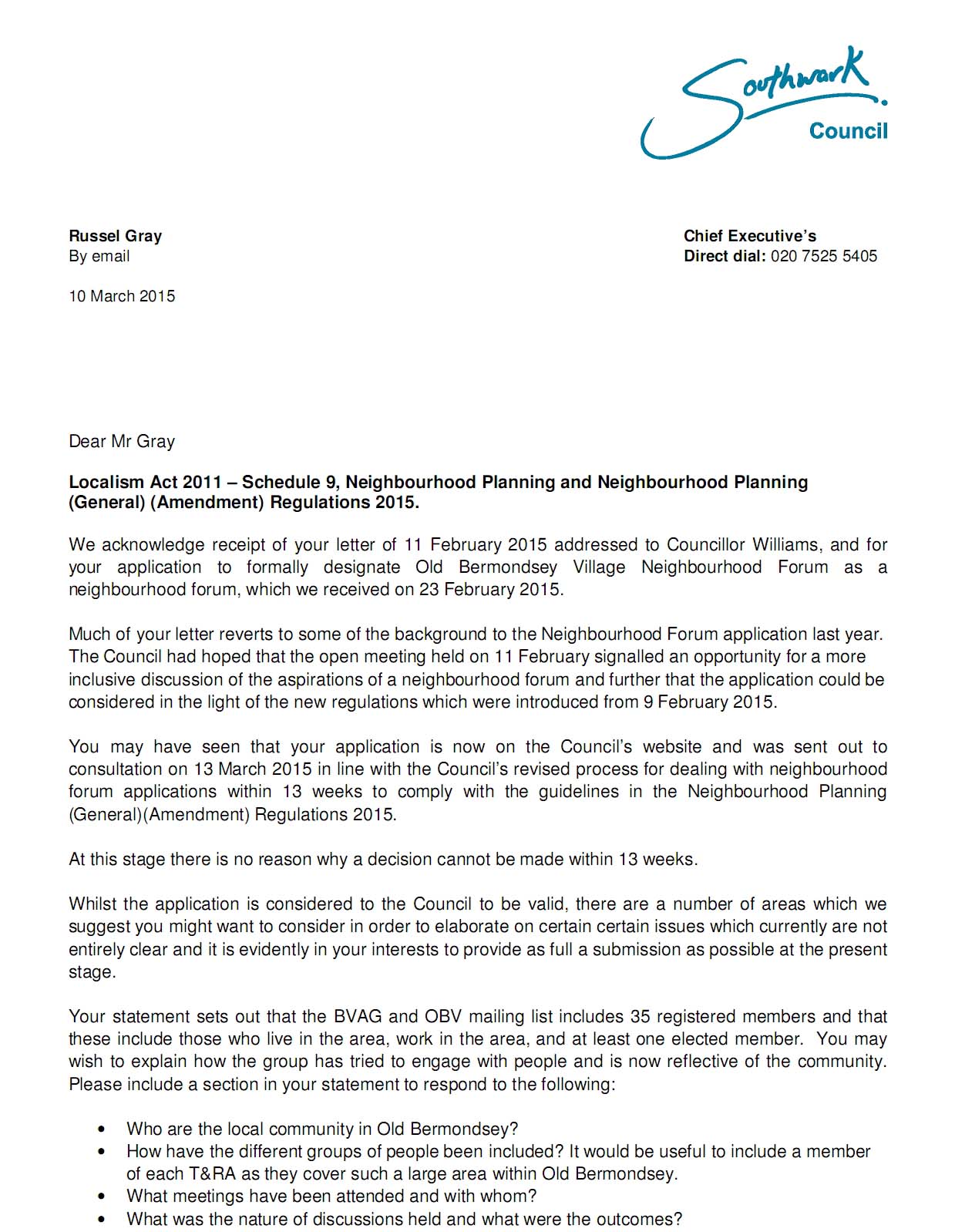
Email from BVAG re Neighbourhood Plan.

Neighbourhood Plan – Council start to wriggle

Confronted with new statutory obligations to process neighbourhood planning applications the Council can no longer rely on delay to stop us. Our new application, amended to take account of their ever growing and evolving demands, was submitted on 20th February.

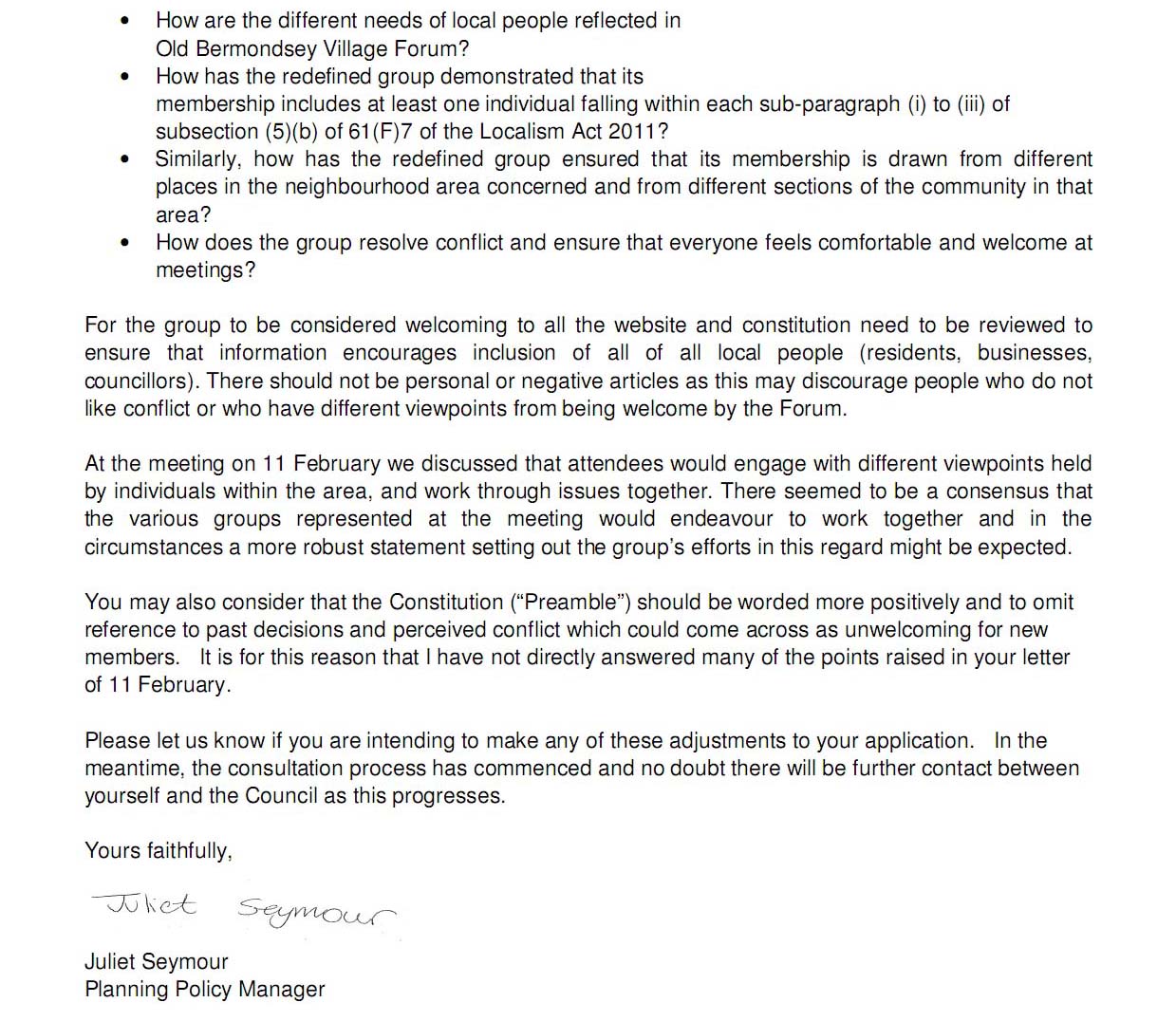
We have now received the letter below in which they are clearly trying to carve themselves enough room to refuse the application. Also see our response below, inviting the Councillor concerned, Cabinet Member for Regeneration, Planning and Transport, Mark Williams, to come and address an open meeting to make out his ‘concerns’ and hear our responses face to face.

The claim that we are not representative of the local community is pretty rich:
Whenever we have consulted locally on planning issues we have invariably attracted many times as many responses with negligible resources as the Council have with all theirs.

Equally unlikely to provide them with an excuse is the claim that we have insufficient support from the Estates: It was them who dictated the very substantial enlargement of our application area to include the large number of Estate blocks. We can hardly be expected to have invested heavily in publicity in an area introduced on their obstructive whim – especially as they have shown every intention of refusing our application if they can possibly find an excuse. As it happens, we have far more followers and members from the estates than they were able to interest in the paltry meeting they organised in February.

Their most desperate line is that neighbourhood planning groups must be adoration societies for their respective local authority planning departments:
What’s the point of the provision for a referendum in the Localism Act if differences between local plans and those of the local authority are not permitted?

e57da912-b946-454c-b807-e6abf777db20

06983c79-d642-4f4e-bba9-76a95b214b33